Guide
Salmon & Fish Internal Temperature (Safe Temp)
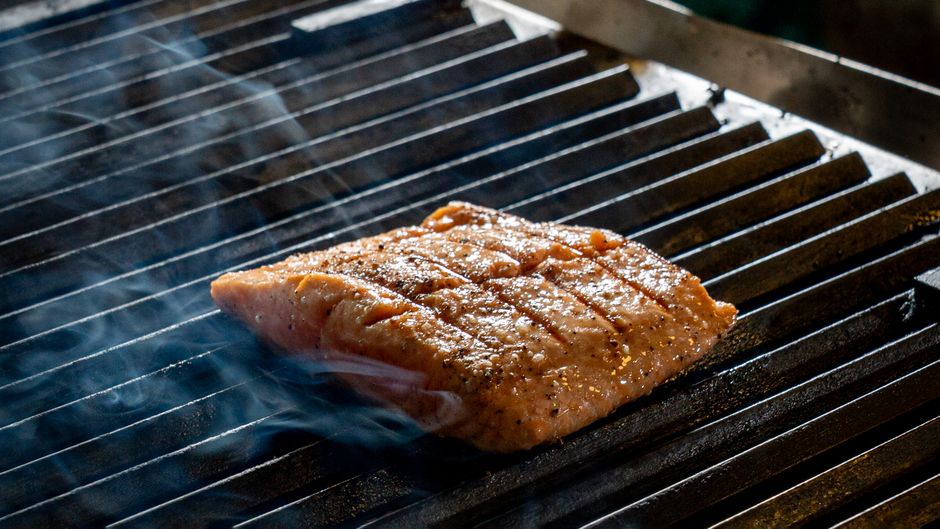
Fish cooks fast, and the window between underdone and dry is narrow, so a food thermometer is the most reliable way to know your fish is both safe and not overcooked. The USDA sets one number for finfish and most shellfish: 145°F (63°C). At that temperature harmful bacteria are controlled and the flesh has turned from translucent to opaque and flaky. Color and texture cues help, but they vary by species, so the thermometer is the tiebreaker.
Doneness is a separate question from safety. Restaurant salmon and seared tuna are often served well below 145°F (63°C) because the cook has chosen texture over the safe-minimum guideline. That can taste excellent, but it is a risk decision — and it matters most for young children, older adults, pregnant people, and anyone with a weakened immune system, who should stick to the full 145°F (63°C).
How to use this chart and where to measure
- Insert an instant-read thermometer into the thickest part of the fillet or steak, holding it so the tip rests in the center — not touching the pan, tray, or any bone.
- For a whole fish, measure the thickest area behind the head, near but not touching the backbone.
- Fish keeps cooking after it leaves the heat, so for thick cuts pull it a few degrees early and let carryover finish it to 145°F (63°C).
- Thin fillets can shoot past 145°F (63°C) in seconds — check early and check often.
Safe cooking temperatures by fish type
| Fish or Seafood | USDA Safe Minimum | Common Chef Pull* | Doneness Cue |
|---|---|---|---|
| Salmon (fillet or steak) | 145°F (63°C) | 125–130°F (52–54°C) | Flesh turns opaque, flakes with a fork; white albumin may bead on the surface |
| Tuna, ahi / yellowfin | 145°F (63°C) | 115–125°F (46–52°C) seared | Seared crust with a cool red-pink center; use previously frozen fish if serving rare |
| Trout | 145°F (63°C) | — | Opaque throughout, flakes easily |
| Cod, haddock, pollock | 145°F (63°C) | — | Opaque white, separates into clean flakes |
| Halibut | 145°F (63°C) | 130–135°F (54–57°C) | Firm and opaque; dries out quickly if pushed past 145°F (63°C) |
| Tilapia, catfish | 145°F (63°C) | — | Opaque and flakes cleanly |
| Mahi-mahi, snapper, sea bass | 145°F (63°C) | — | Opaque with moist, tender flakes |
| Shrimp | 145°F (63°C) | — | Turns pink and opaque; curls into a loose C shape |
| Scallops | 145°F (63°C) | — | Milky-white, opaque, and firm to the touch |
| Lobster, crab | 145°F (63°C) | — | Flesh is pearly and opaque; lobster shell turns bright red |
| Clams, mussels, oysters | Until shells open | — | Shells pop open during cooking; discard any that stay shut |
*Common chef pull temperatures are texture preferences that fall below the USDA safe minimum of 145°F (63°C). Serving fish this rare raises the risk of foodborne illness, so reserve it for very fresh, high-quality fish and avoid it entirely if you are in a higher-risk group. If you plan to eat fish raw or rare — sushi, sashimi, crudo, or ceviche — use fish that has been commercially frozen to the FDA's parasite-destruction standards. The label "sushi-grade" is a marketing term, not a regulated safety guarantee.
Tips
- The 145°F (63°C) rule covers finfish plus shrimp, scallops, lobster, and crab — reach for the thermometer on all of them.
- Clams, mussels, and oysters are done when their shells open during cooking; throw out any that stay closed rather than prying them.
- White beads of albumin on salmon mean the surface is hot — often a sign you are at or past the safe temperature and starting to overcook.
- Overcooked fish turns dry and chalky, so when safety allows, aim to hit 145°F (63°C) and stop instead of blowing past it.
- Wash the thermometer probe between fish so you do not carry raw juices onto cooked food.
Frequently asked questions
Is 145°F really necessary for salmon?
For safety, yes — the USDA safe minimum internal temperature for salmon and all finfish is 145°F (63°C). Many chefs pull salmon lower at 125–130°F (52–54°C) for a medium texture, but that is a preference below the safe minimum. Young children, older adults, pregnant people, and anyone immunocompromised should stick to 145°F (63°C).
Why do restaurants serve salmon and tuna so rare?
It is a texture choice. A center at 125–130°F (52–54°C) stays silky and moist, and seared tuna is often barely warmed through. Kitchens accept and manage the added risk by using very fresh, often previously frozen fish. You can make the same call at home, but know it falls short of the 145°F (63°C) safe minimum.
Is sushi-grade fish safe to eat raw?
"Sushi-grade" is a marketing label, not an inspected government standard. Raw-fish safety comes from freezing that meets the FDA Food Code's parasite-destruction requirements, plus careful handling. Even then some risk remains, so higher-risk eaters should avoid raw or lightly cooked fish.
How can I tell fish is done without a thermometer?
Cooked fish turns from translucent to opaque and flakes apart with gentle pressure from a fork. Those cues are useful, but they vary by species and cut, so a food thermometer reading 145°F (63°C) in the thickest part is far more reliable — especially for thick fillets and whole fish.
Do shellfish need a temperature check?
Shrimp, scallops, lobster, and crab reach the same 145°F (63°C) safe minimum and should look opaque and firm. Clams, mussels, and oysters are the exception: cook them until the shells open, and discard any that never do.
Related guides
 GuideChicken Internal Temperature: Safe Temp & Where to CheckChicken internal temperature: USDA safe minimum is 165°F (74°C) for all cuts. See the temp chart by cut and exactly where to check with a thermometer.Read more →
 GuideGround Beef & Hamburger Internal TemperatureCook ground beef and hamburgers to a safe internal temperature of 160°F (71°C). USDA rules, a temp table, and where to measure a patty.Read more →
 GuideHow Long to Bake Chicken Breast (Time & Temp)How long to bake chicken breast at 375°F, 400°F, or 425°F by weight—plus the one number that matters: a safe 165°F (74°C) internal temp.Read more →
 GuideHow Long to Boil Eggs (Soft, Medium and Hard)How long to boil eggs for soft, medium and hard results, plus the USDA safe temp (160°F) for egg dishes and vulnerable groups.Read more →
This page contains affiliate links – if you buy through them we may earn a commission, at no extra cost to you. The recommendations are our own assessment.